

Thermic Fluid System Walk Through Audit
A thermic fluid heating system is an important part of many industrial processes. The performance of the complete system depends not only on the heater, but also on the thermic fluid, pump, expansion tank, deaeration tank, pipelines, valves, insulation, and the equipment where the heat is finally used.
Our Thermic Fluid System Audit is a comprehensive assessment of the complete heating system to understand its performance, efficiency, safety, and operating condition. The audit helps identify energy losses, operating problems, safety risks, and opportunities to improve the overall system.
1. Complete System Inspection
We inspect the major components of the thermic fluid system, including the thermic fluid heater, circulation pump, expansion tank, deaeration tank, pipelines, valves, insulation, and heat-consuming equipment. We review the overall operation of the system and identify areas that may require attention.
2. Heater Performance & Energy Efficiency
We evaluate the performance of the thermic fluid heater by reviewing fuel consumption, operating temperatures, surface temperatures, combustion conditions, and heat losses. This helps identify areas where fuel and energy are being wasted and where improvements can be made to increase heating efficiency.
3. Thermic Fluid Condition
The condition of the thermic fluid has a direct impact on system performance and safety. We assess the available thermic fluid analysis and review important properties such as viscosity, flash point, acidity, degradation, carbon formation, and other relevant parameters. Based on the condition of the fluid, we provide recommendations for filtration, purification, decarbonization, or fluid replacement when required.
4. Expansion & Deaeration System
We inspect the expansion tank and deaeration tank arrangement, including their location, connections, venting, and operating conditions. Proper expansion and deaeration are essential for stable and safe thermic fluid circulation. We identify potential design or operating issues that may contribute to fluid degradation, oxidation, or unsafe operation.
5. Pump, Pipeline & Insulation Inspection
The circulation pump, pipelines, valves, and insulation are checked for proper operation and possible heat losses. Poor insulation, incorrect piping arrangements, pressure drops, leakage, or inadequate circulation can reduce system efficiency. We identify such issues and suggest practical corrective measures.
6. Safety Assessment
Safety is an important part of our audit. We review the operating practices and safety arrangements of the system, including safety interlocks, temperature and pressure controls, emergency shutdown arrangements, electrical panels, and other important safety provisions. Potential hazards are highlighted so that suitable corrective action can be taken.
7. Design & P&ID Review
Where drawings are available, we review the basic system layout and Piping & Instrumentation Diagram (P&ID). We examine the arrangement and sizing of major components, piping circuits, expansion and deaeration systems, and instrumentation to identify possible design or operational improvements.
Audit Report & Recommendations
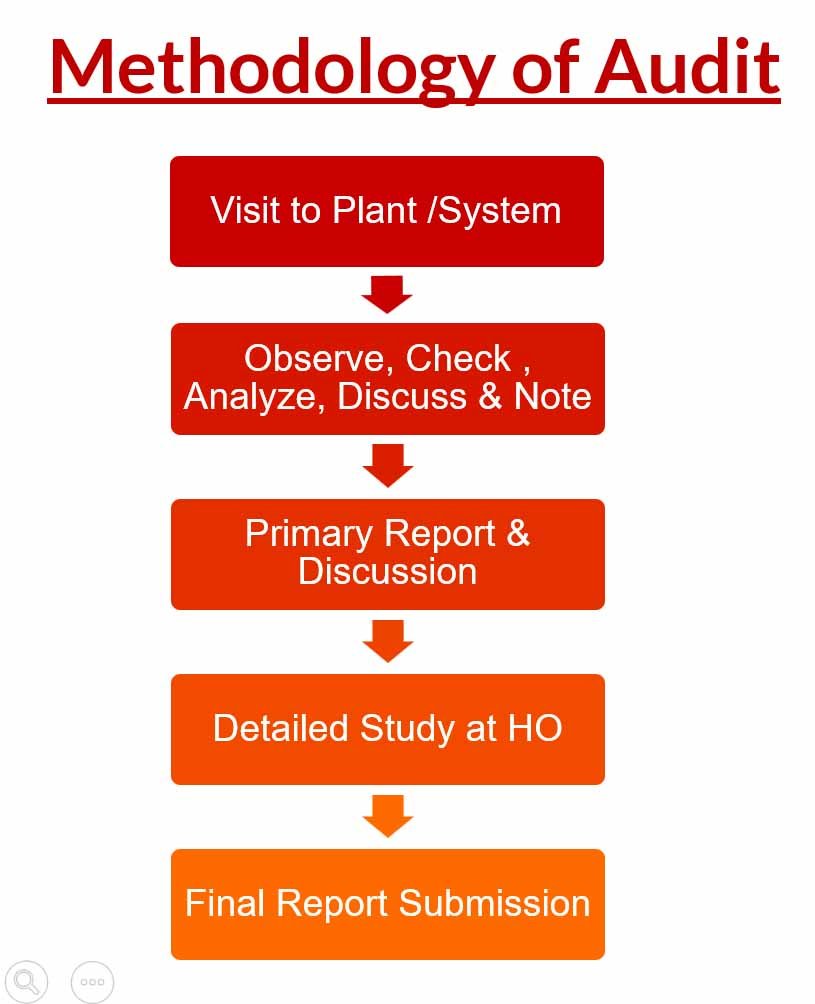
After completing the audit, we provide a detailed report covering our observations, identified problems, potential risks, and improvement opportunities. Recommendations are provided in a practical manner, based on the condition and operating requirements of the system. Where applicable, we may also provide preliminary cost estimates for recommended corrective actions. The recommendations may range from simple housekeeping and operating improvements to equipment modifications, system upgrades, fluid treatment, or detailed engineering solutions.
Our Objective
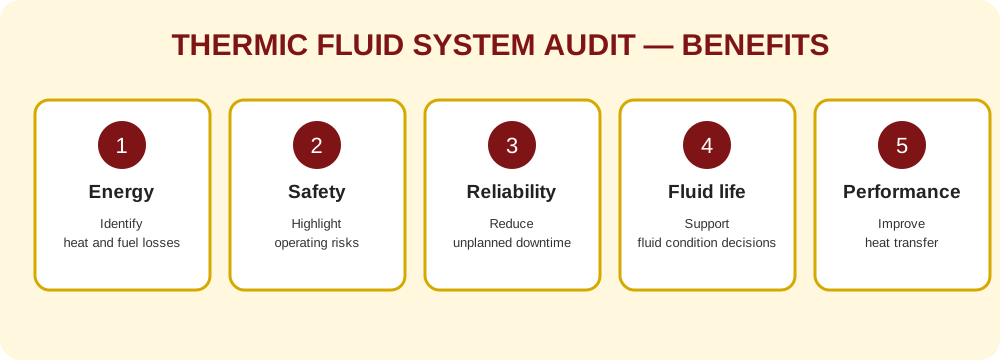
The main objective of our Thermic Fluid System Audit is to help industries operate their thermic fluid systems safely, efficiently, and reliably. A properly maintained system can help reduce fuel consumption, minimize heat losses, improve heat-transfer performance, extend thermic fluid life, reduce unplanned downtime, and lower overall operating and maintenance costs.